
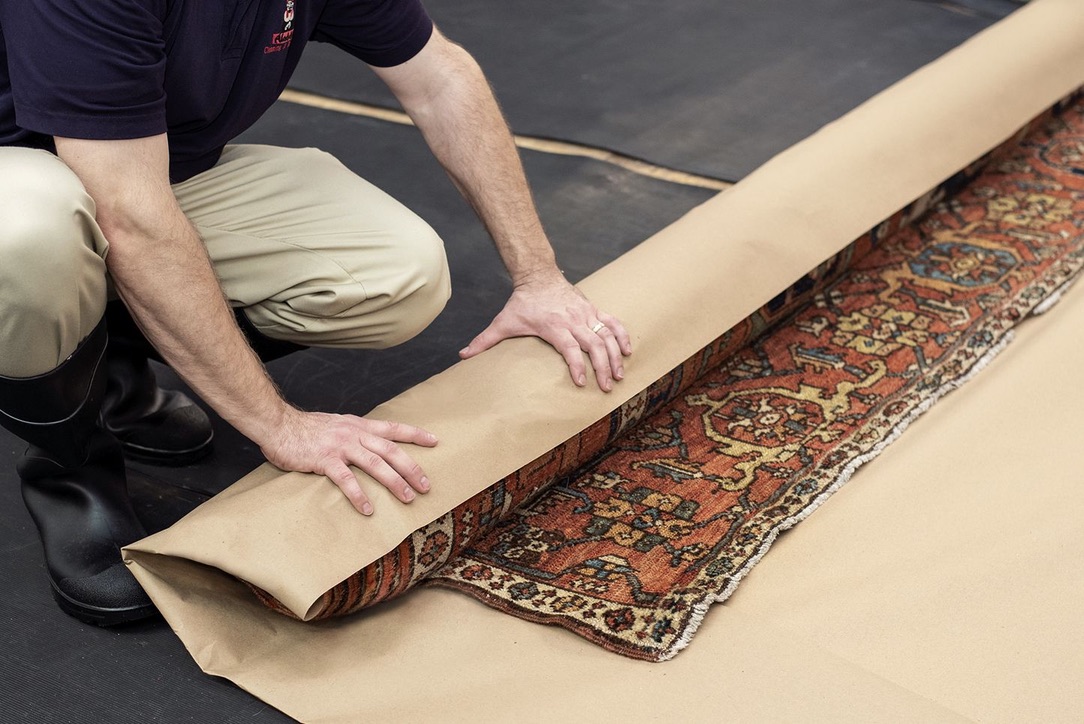
Secure Rug Storage
Clean, secure, reliable, and flexible. Steps to prepare your rug for storage to keep it safe and protected. If you’re not ready to recieve your rugs after cleaning and/or repair services are complete, we will be happy to hold your rugs for up to 30 days.
How we carefully store rugs:
- Rugs in storage will be inspected 4-6 months for signs of any odor, for dusting, re-rolling, and re-wrapping.
- Best when rugs stored after washing / repair.
- Recommeneded: Mothproof rug if wool.
- Completely dry the rug, groom, roll, wrap and seal rug from insects, wet area, and the public.
- Wrapped rug will have air-flow (enough). All rugs will be placed above ground floor. Its never set on the floor or forgotten.
- Temperature contoled storage facility.
What to Avoid
- Don’t use mothballs or moth flakes for preventing moth damage. (These materials have little insect repellent effect, and the odor they impart to the rug can be difficult to remove.)
- Don’t wrap with newspaper.
- Rugs should never be stored dirty.
Read about our rug cleaning services.
We provide a periodic evaluation
We provide a periodic evaluation for carpets that are in storage for over a year. Our inspection process worth it and your rugs appreciate it. We’ll unwrap, unroll, vacuum, and re-roll your rugs every quarter or so to be extra sure they are in good shape.
Long Term Rug Storage
Whether you are planning a move, renovating, downsizing, or have just inherited family heirloom rugs and cant use them in your home, we can protect your rug during its time out of use.
Best Practices
When a rug is to be stored for more than a few months, professional rug cleaning is recommended but not necessary if the rugs are clean and ready for storage.
You’d be surprised how easily a moth or carpet beetle can get into even the tightest of spaces, so when storing your Oriental rug, make sure it’s in an air-tight container of some kind if at all possible. If you plan to do it to store your rugs yourself, we’ve put together a few tips for properly preparing your rugs for storage.
If you have any questions or need a few rug storage ideas, get in touch by phone at 443-883-5825.
Helpful links for DIY rug storage: